
Smart Plugs & Home Automation
Smart plugs are commodity hardware now: most are Tuya/Smart Life inside, which is good news because it means Alexa, Google and local control all work. What varies is the load rating (10A for lamps and fans, 16A for heaters and kettles), whether there is energy monitoring worth reading, and which WiFi band it needs — almost all of them are 2.4GHz only.
What decides the purchase
- Load rating
- The safety spec, not a marketing one. 10A/2300W for lighting, 16A for resistive loads like heaters
- App ecosystem
- Decides whether you can automate it at all. Tuya/Smart Life integrates with Alexa and Google and has a local API
- Energy monitoring
- Useful only if the plug reports real watts. Look for stated metering accuracy, not just a graph in the app
- Form factor
- A plug that blocks the neighbouring socket is annoying. Slim/stackable bodies for power strips
- Local control
- Cloud outages should not turn the lamp off. Tuya devices can be flashed or run through local bridges
Our rule of thumb
Buy 16A if the load has a heating element, 10A is fine for lamps and fans. Prefer Tuya-based plugs so you are not locked to a dead app in two years.
Smart plugs are commodity hardware now: most are Tuya/Smart Life inside, which is good news because it means Alexa, Google and local control all work. What varies is the load rating (10A for lamps and fans, 16A for heaters and kettles), whether there is energy monitoring worth reading, and which WiFi band it needs — almost all of them are 2.4GHz only
Showing all 2 results
-
Smart Plugs & Home AutomationView buying decision
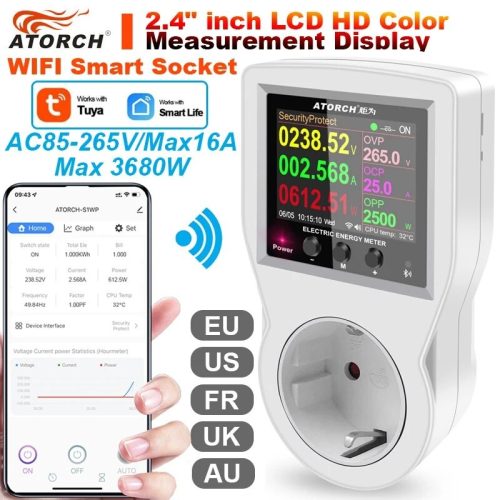
AC85-265V 16A Tuya WIFI Smart Socket Digital Wattmeter Electricity Consumption Power Kwh With Switch Power
Catalog price · Nov 9, 2026 Original price was: $58.21.$17.10Current price is: $17.10. -
Smart Plugs & Home AutomationView buying decision
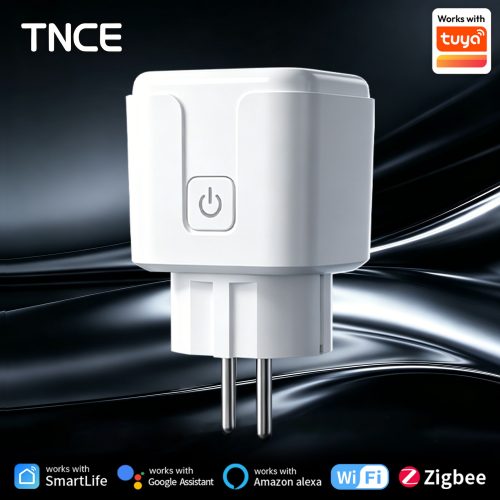
TNCE Tuya Smart Plug WiFi Zigbee3.0 Socket 16A 20A Power Monitoring Timing Smart Life APP Remote Control
Catalog price · Nov 9, 2026 Original price was: $16.50.$8.25Current price is: $8.25.
Selection rule behind these listings: at least 200 recorded orders, buyer rating 4.5+, inside the category price band — ranked by order volume × rating ÷ price. See all 16 categories · method.